
Activating Strategic Opportunities in PSTA5 for Agricultural Sector Stakeholders
Posted: Dec 10, 2024
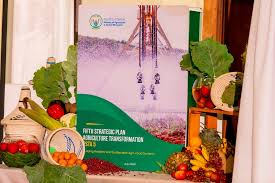
The Fifth Strategic Plan for Agriculture Transformation (PSTA5) is a pivot from input‑driven support to system‑level transformation linking productivity, markets, climate resilience, and human capital under one financing umbrella. Its ambition is clear: move agriculture from subsistence to a competitive, climate‑smart agri‑food economy aligned with Vision 2050. The plan’s credibility rests on three levers: execution capacity, risk‑sharing with private capital, and data‑enabled coordination across ministries and districts.
Strategic architecture and coherence
- Policy alignment: PSTA5 nests within Vision 2050 and national nutrition, climate, and export agendas, shifting from farm‑level interventions to value‑chain competitiveness (inputs→production→processing→trade). This coherence reduces fragmentation seen in earlier cycle
- Financing thesis: The plan targets ~Rwf6.99 trillion over five years, with ~47% public and ~53% private/grants, explicitly positioning private capital as co‑driver of outcomes. This is a structural change in Rwanda’s ag policy financing mix
- Delivery logic: Emphasis on climate‑smart irrigation, soil health, mechanization, post‑harvest handling, and digital systems, each tied to measurable productivity and resilience gains
Where the private sector can invest (high‑impact entry points)
- Agri‑tech and digital platforms: Precision farming tools, mobile advisory services, and digital marketplaces for inputs and outputs.
- Irrigation and water management: Affordable irrigation technologies, smart water systems, and climate‑resilient infrastructure.
- Agro‑processing and value addition: Facilities for coffee, tea, horticulture, and livestock products to reduce post‑harvest losses and expand exports.
- Input supply chains: Quality seeds, fertilizers, and mechanization services tailored to smallholder farmers.
- Renewable energy for agriculture: Solar‑powered cold storage, biogas solutions, and energy‑efficient processing units.
- Financial services and insurance: Innovative credit schemes, crop insurance, and digital payment solutions to de‑risk farming.
- Youth and women‑led agribusiness: Incubators, training hubs, and venture capital targeting inclusive entrepreneurship.
Execution risks and how to mitigate them
- Financing gap realism: Counting on >50% private/grant funding is bold. Mitigate via blended finance (first‑loss guarantees, results‑based grants, viability gap funding) and PPP frameworks with clear tariff and concession rules
- Climate volatility: Droughts/floods can erase gains. Prioritize irrigation service models, index insurance, and climate‑smart seed systems; embed contingency budgets and parametric triggers in contracts
- Capacity and adoption: Technology uptake hinges on extension quality. Use private e‑extension platforms bundled with inputs/credit; pay for outcomes (hectares under CSA, reduction in post‑harvest loss)
- Market exposure: Export‑led plays face price swings. Hedge via diversified product portfolios, forward contracts, and regional market access; build quality certification capacity to sustain premiums